Designing Small Bathrooms with Effective Shower Layouts
Designing a small bathroom shower requires careful planning to maximize space and functionality. With limited square footage, choosing the right layout can significantly enhance usability and aesthetic appeal. Various configurations, including corner showers, walk-in designs, and shower-tub combos, provide options suited for compact spaces. Understanding the advantages and limitations of each layout helps in making informed decisions that balance style and practicality.
Corner showers utilize often underused space in small bathrooms. They typically feature a triangular or neo-angle design that fits neatly into a corner, freeing up room for other fixtures. These layouts are ideal for maximizing space efficiency without sacrificing style.
Walk-in showers offer a sleek, open appearance that can make small bathrooms feel more spacious. They often incorporate frameless glass enclosures and minimalistic fixtures, creating a modern look with easy access and cleaning.
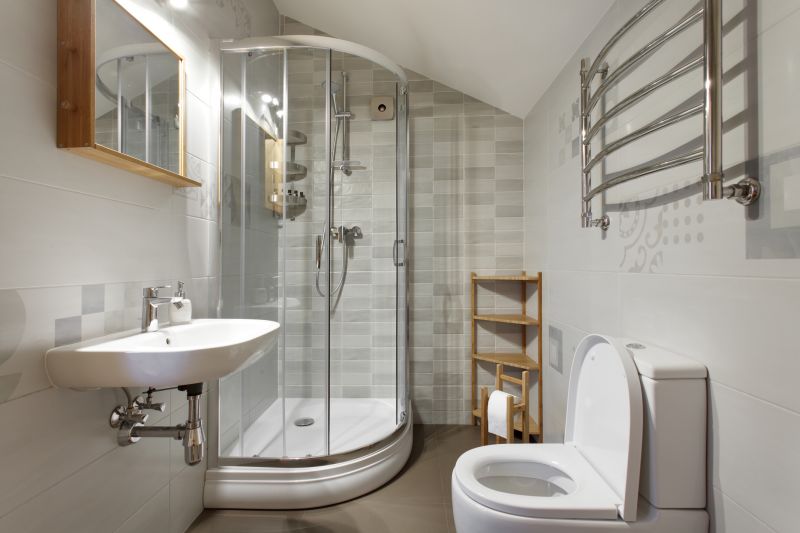
Compact shower designs often feature innovative use of space, such as sliding doors or glass panels that extend to the ceiling. These elements help create an illusion of openness, making the bathroom appear larger.
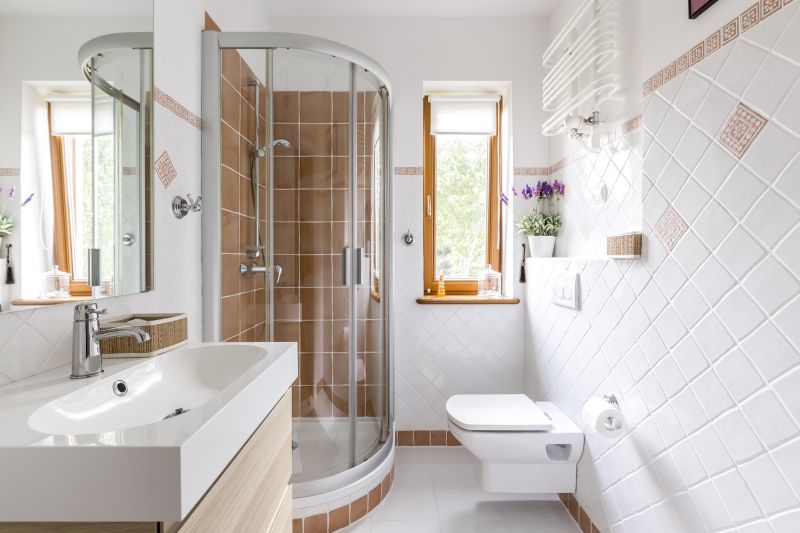
A corner shower with a glass enclosure maximizes corner space and provides a clean, modern aesthetic. Clear glass helps maintain visual openness, preventing the space from feeling cramped.
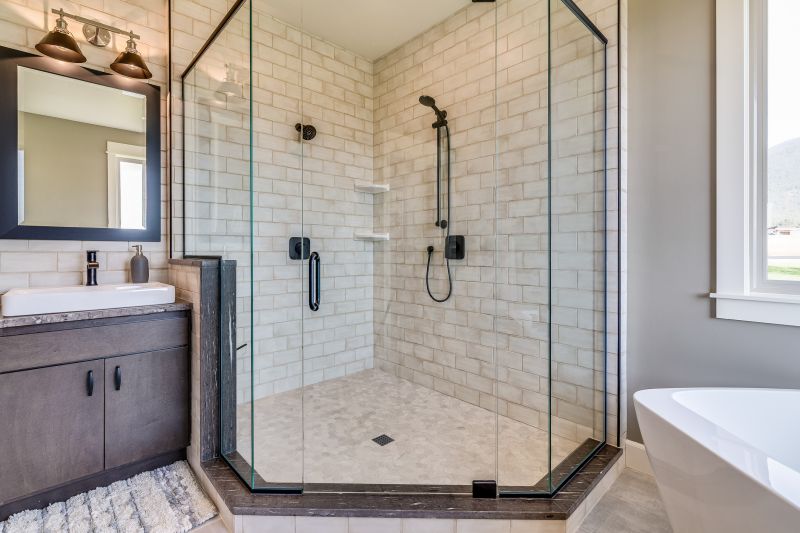
Incorporating built-in niches into walk-in showers offers convenient storage for toiletries while maintaining a streamlined appearance. Frameless glass enhances the sense of space.
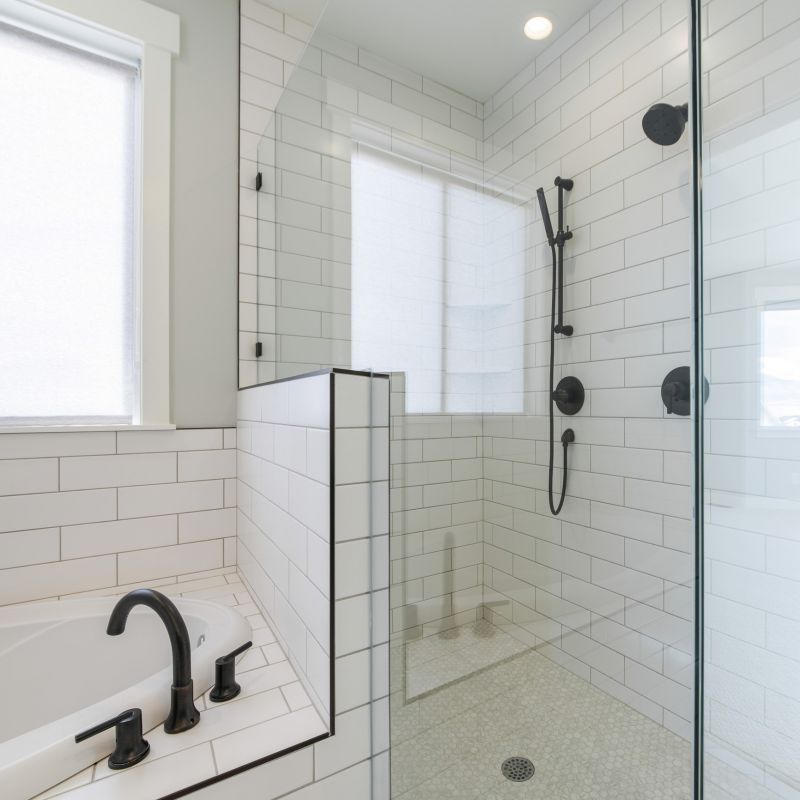
A shower-tub combo provides versatility in small bathrooms, combining bathing and showering functions in a compact footprint. This layout is practical for families and maximizes utility.
Effective use of space in small bathroom shower layouts involves selecting fixtures and accessories that enhance functionality without cluttering the environment. Compact showerheads, wall-mounted controls, and minimalistic shelving contribute to a clean and efficient design. Additionally, the choice of materials, such as large-format tiles or light colors, can reflect light and create a sense of openness. Proper planning ensures that the shower area remains accessible and comfortable, even in tight quarters.
| Layout Type | Advantages |
|---|---|
| Corner Shower | Maximizes corner space, suitable for small bathrooms, customizable with various shapes. |
| Walk-In Shower | Creates an open feel, easy to access, minimal maintenance. |
| Shower-Tub Combo | Provides versatility, saves space, suitable for families. |
| Neo-Angle Shower | Efficient use of space, modern aesthetic, fits into awkward corners. |
| Glass Enclosure | Enhances visual openness, easy to clean, modern appearance. |
| Niche Storage | Offers convenient storage solutions, reduces clutter, maintains sleek look. |
Lighting plays a crucial role in small bathroom shower layouts. Bright, well-placed lighting fixtures can eliminate shadows and highlight design features, making the space feel larger. Combining natural light with artificial sources, such as recessed lighting or LED strips, enhances visibility and ambiance. Proper ventilation is also essential to prevent moisture buildup, which can be achieved through exhaust fans or windows, ensuring the shower area remains fresh and mold-free.
Incorporating accessories like grab bars, fold-down seats, and adjustable showerheads can improve safety and comfort in small shower spaces. These elements should be integrated seamlessly into the design to maintain a streamlined appearance. Thoughtful planning of the layout ensures that every inch of space is utilized effectively, resulting in a functional and visually appealing small bathroom shower.